-
UID:317649
-
- 注册时间2020-06-19
- 最后登录2025-12-12
- 在线时间1894小时
-
-
访问TA的空间加好友用道具

|
简介:FRED作为COM组件可以实现与Excel、VB、Matlab等调用来完成庞大的计算任务或画图,本文的目的是通过运行一个案例来实现与Matlab的相互调用,在此我们需要借助脚本来完成,此脚本为视为通用型脚本。 �$S8�bp3)� 8'"/gC�{�� 配置:在执行调用之前,我们需要在Matlab命令行窗口输入如下命令: [K��I`�e� enableservice('AutomationServer', true) p��t�y�D�v enableservice('AutomationServer') �M��Z�W
Y 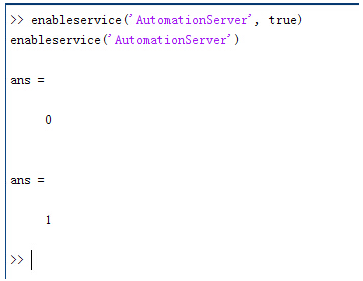 Hc�Vs(]tIW 结果输出为1,这种操作方式保证了当前的Matlab实体可以用于通信。 `�AHNk7 t= ���k`mrR�s 在winwrp界面,为增加和使用Matlab类型的目录库,我们需要如下步骤: J��S��?l?~ 1. 在FRED脚本编辑界面找到参考. �<�VR&=�YJ 2. 找到Matlab Automation Server Type Library �C�%?D E@k 3. 将名字改为MLAPP GdeR#�%��z N|d.!Q;V.y u$,�Wyi )L 在Matlab里面有两种常用的数据发送选项PutWorkspaceData 及PutFullMatrix,PutWorkspaceData适用于存储一般的数据在工作区,并赋予其为变量,PutFullMatrix试用于复数数据。 _AHB�|P I 9Q7c�UoxY� Hc�Vs(]tIW 结果输出为1,这种操作方式保证了当前的Matlab实体可以用于通信。 `�AHNk7 t= ���k`mrR�s 在winwrp界面,为增加和使用Matlab类型的目录库,我们需要如下步骤: J��S��?l?~ 1. 在FRED脚本编辑界面找到参考. �<�VR&=�YJ 2. 找到Matlab Automation Server Type Library �C�%?D E@k 3. 将名字改为MLAPP GdeR#�%��z N|d.!Q;V.y u$,�Wyi )L 在Matlab里面有两种常用的数据发送选项PutWorkspaceData 及PutFullMatrix,PutWorkspaceData适用于存储一般的数据在工作区,并赋予其为变量,PutFullMatrix试用于复数数据。 _AHB�|P I 9Q7c�UoxY� 图 编辑/参考 /\u�H�[[�s k>;r�9^��D 现在将脚本代码公布如下,此脚本执行如下几个步骤: �n[:A���V� 1. 创建Matlab服务器。 \Bc���JDdL 2. 移动探测面对于前一聚焦面的位置。 :�G=�1�$gb 3. 在探测面追迹光线 5`'au61�/2 4. 在探测面计算照度 X��a%�&.&V 5. 使用PutWorkspaceData发送照度数据到Matlab ��oy2��dA 6. 使用PutFullMatrix发送标量场数据到Matlab中 9
�roth� 7. 用Matlab画出照度数据 4f[M$xU�&h 8. 在Matlab计算照度平均值 ��U�H,4b`b 9. 返回数据到FRED中 ��P}W�h��E -5,y�
1_M 代码分享: �>`?+FDOJ, b�,��
*�*$ Option Explicit 2N8sq(�LK{ �K6yFpVl� Sub Main Ta\8�>�\�6 RQ)!K���lY Dim ana As T_ANALYSIS 2���\�Ck�X Dim move As T_OPERATION �n�P{sCH 1 Dim Matlab As MLApp.MLApp I;.!
hV>E Dim detNode As Long, detSurfNode As Long, anaSurfNode As Long �a0/n13c?G Dim raysUsed As Long, nXpx As Long, nYpx As Long t"bPKFRy9E Dim irrad() As Double, imagData() As Double, reals() As Double, imags() As Double >;&V~q:di Dim z As Double, xMin As Double, xMax As Double, yMin As Double, yMax As Double S}p�&\�w H Dim meanVal As Variant IJBJebqL� >-|90CSdSJ Set Matlab = CreateObject("Matlab.Application") �$h]Y<&('G &~J�fDe9IS ClearOutputWindow �+�yP[�(b/ ~)m �t&
� 'Find the node numbers for the entities being used. >7(~'#x8A" detNode = FindFullName("Geometry.Screen") �C�(1A�8 detSurfNode = FindFullName("Geometry.Screen.Surf 1") ���wI]R+.� anaSurfNode = FindFullName("Analysis Surface(s).Analysis 1") s8y�TK2v2\ �Ox��H�w1k 'Load the properties of the analysis surface being used. ��q~'�
K�9 LoadAnalysis anaSurfNode, ana #9h�XZr/�8 gQpD]p�%k 'Move the detector custom element to the desired z position. <�&�Y}j&(� z = 50 X�AULD]Q� GetOperation detNode,1,move ��oB{�}-[G move.Type = "Shift" X?�v�^>�mA move.val3 = z �hKzBq*c�V SetOperation detNode,1,move ZG��\ �I1 Print "New screen position, z = " &z wp]7Lx?F�� k"^t?\Q%vI 'Update the model and trace rays. ��\`Ph=lJO EnableTextPrinting (False) Rqb{)L
X* Update b6WC�@j`*T DeleteRays 1l�|A[��G� TraceCreateDraw s?G'l=CcKu EnableTextPrinting (True) WP%��{{zR$ )�,y!<�\oQ 'Calculate the irradiance for rays on the detector surface. 5Du��>-.�r raysUsed = Irradiance( detSurfNode, -1, ana, irrad ) |p8"9jN@}c Print raysUsed & " rays were included in the irradiance calculation. ;�*�g*D�IR X�~)V)'R� 'When using real number data to send to MATLAB, it is simplest to use PutWorkspaceData. �
�uR��B)g Matlab.PutWorkspaceData("irradiance_pwd","base",irrad) /VmCN�]2AZ /,u�SCIT�D 'PutFullMatrix is more useful when actually having complex data such as with #EQ�x����� 'scalar wavefield, for example. Note that the scalarfield array in MATLAB g�Sv[4,hXd 'is a complex valued array. �`3sy>GU?� raysUsed = ScalarField ( detSurfNode, -1, ana, reals, imags ) B=Zuk��g1G Matlab.PutFullMatrix("scalarfield","base", reals, imags ) 9O�Q0Yc�!3 Print raysUsed & " rays were included in the scalar field calculation." UP~�WP@�0F 7�k`*u�) Q 'Calculate plot characteristics from the T_ANALYSIS structure. This information is used -M>K4*�%�K 'to customize the plot figure. S4{Mu(^xT xMin = ana.posX+ana.AcellX*(ana.Amin-0.5) K5)yM� @cq xMax = ana.posX+ana.AcellX*(ana.Amax+0.5) G�OZQ5m�
- yMin = ana.posY+ana.BcellY*(ana.Bmin-0.5) �
EN�YF0wW yMax = ana.posY+ana.BcellY*(ana.Bmax+0.5) %g]$�Vf�py nXpx = ana.Amax-ana.Amin+1 �"3X�v%U9@ nYpx = ana.Bmax-ana.Bmin+1 S-M)MC���L �x8pbO[_| 'Plot the data in Matlab with some parameters calculated from the T_ANALYSIS bU:�}Z�O^S 'structure. Set the axes labels, title, colorbar and plot view. P+;CE|J`X� Matlab.Execute( "figure; surf(linspace("&xMin &","&xMax &","&nXpx &"),linspace("& yMin &"," & yMax & "," & nYpx & "),irradiance_pwd, 'EdgeColor', 'None');" ) I", &%0ycm Matlab.Execute( "xlabel('X Position (" & GetUnits() & ")')" ) : Matlab.Execute( "ylabel('Y Position (" & GetUnits() & ")')" ) : Matlab.Execute( "zLabel( 'Irradiance' )" ) ni�"$[��8U Matlab.Execute( "title('Detector Irradiance')" ) 6��<qwP?WN Matlab.Execute( "colorbar" ) bQ^DX `o6P Matlab.Execute( "view(2)" ) /�+x#�V!zM Print "" \�&\�_>X., Print "Matlab figure plotted..." :Er^"9'A�2 'd2qa`H'}B 'Have Matlab calculate and return the mean value. (/�"K�+$8' Matlab.Execute( "irrad = mean(mean(irradiance_pwd));" ) ]e@0�T�{! Matlab.GetWorkspaceData( "irrad", "base", meanVal ) c4Z��uW_&: Print "The mean irradiance value calculated by Matlab is: " & meanVal 5M<�'��A�= E�,<\T6/%q 'Release resources 7|+�|\�7l# Set Matlab = Nothing ~$&�:NB1~q m{b��Z�Rkt End Sub �PkP��DVv� �kb"_6,[Ms 最后在Matlab画图如下: !^�)��wPmk tp6csS�,
并在工作区保存了数据: �X�6Lh��M� tT@w%Sz57N 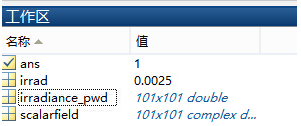 [5?�4�c'Ev [5?�4�c'Ev
T}L^�C�U0� 与FRED中计算的照度图对比: ?Y�?���gzD i}�/e}s<-6 例: |+Hp�+9�J� :m�XG�IR�i 此例系统数据,可按照此数据建立模型 [K ��cki+
�"*++��55� 系统数据 T~i%j@�Q.6
W>5vR�wx00
J�m�U<�y� 光源数据: heE}_,$| Type: Laser Beam(Gaussian 00 mode) ��!�US8a�T Beam size: 5; <*s"e)XeqF Grid size: 12; gk��!E$NyE Sample pts: 100; _z�tZ>��'� 相干光; =�=Q�WwPpA 波长0.5876微米, s<�[A�0=LH 距离原点沿着Z轴负方向25mm。 �E�MVk:Vt] _j:UGMTi(U 对于执行代码,如果想保存图片,请在开始之前一定要执行如下代码: _iG2�J&1'L enableservice('AutomationServer', true) X+=-f^)&� enableservice('AutomationServer') s kN9O"^A�
|


